
Emergency Roof Repair Services for Pembroke Pines Homes
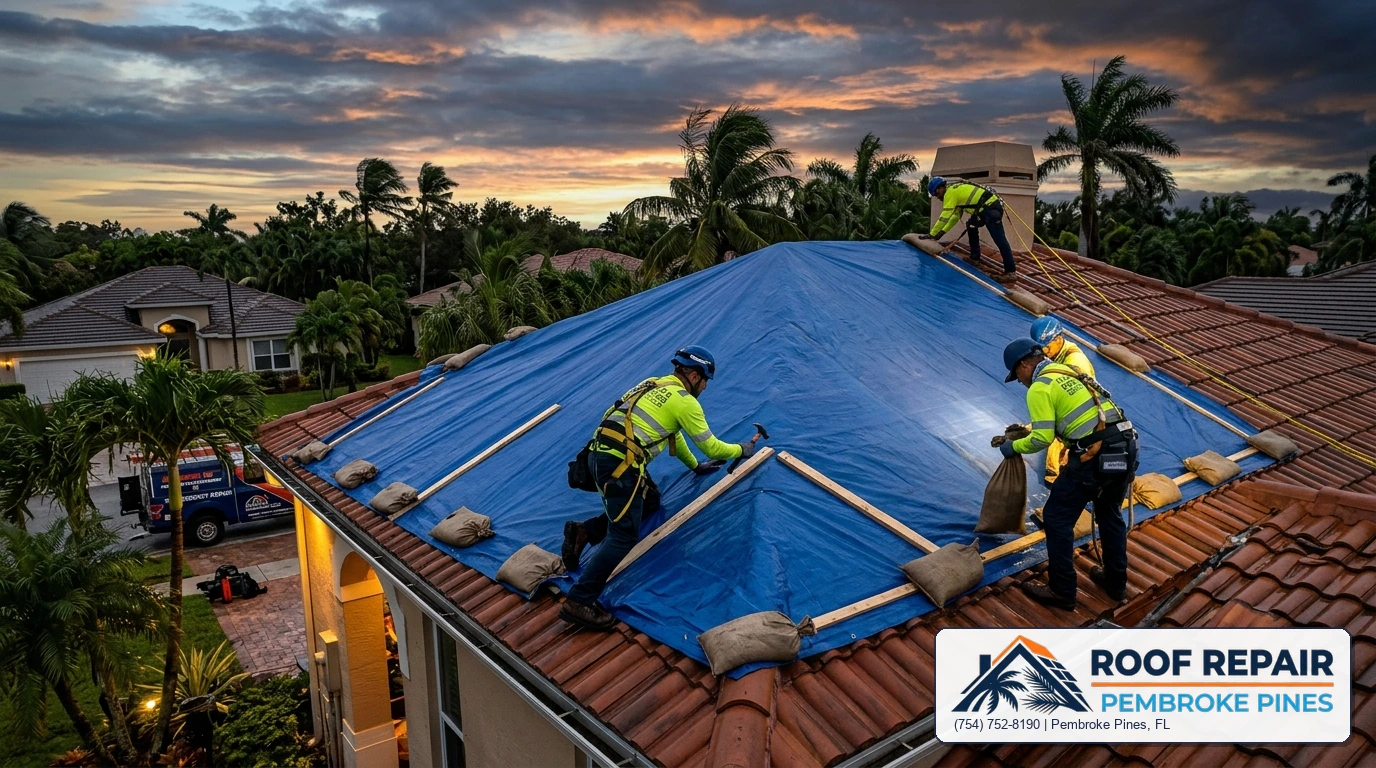
Sudden roofing damage doesn't wait for a convenient time. When your roof is actively allowing water inside, materials are displaced, or storm debris has compromised the roof surface — prompt evaluation and stabilization help prevent additional interior damage while a permanent repair is planned.
Roofing Problems That May Require Prompt Attention
Not every roofing issue requires an emergency response — but these conditions typically do, because delaying action increases the risk of interior water damage and structural compromise.
Active water entry during or immediately after rainfall
Water dripping or flowing into the home through the ceiling or walls indicates a direct breach in the roofing system that needs to be addressed before the next rain event.
Visibly missing or displaced roofing materials
When shingles, tiles, or flashing components have been blown off, shifted, or broken — the underlayment and decking beneath are exposed to the elements and need temporary protection.
Fallen tree limbs or debris impacting the roof surface
Tree branches, fence sections, or airborne debris that have landed on and damaged the roof may have created openings, cracked tiles, or punctured the roofing membrane.
Sagging or soft areas visible from inside the home
A ceiling that appears to be bowing, sagging, or feels soft to the touch near water stains may indicate that moisture has been accumulating and the substrate is weakening — which warrants immediate evaluation.
What Homeowners Can Safely Do Before Service Arrives
While waiting for a roofing professional, there are safe steps you can take inside your home to minimize additional damage.
Move furniture and belongings away from water entry
Relocate items that are directly below active dripping to prevent additional personal property damage.
Place containers to catch dripping water
Buckets, bins, or any containers can help manage active leaks until temporary protection is in place on the roof.
Document the visible damage with photos
Photograph ceiling stains, water entry points, and any visible exterior damage from ground level. This documentation can be useful for insurance and repair reference.
Stay off the roof
Do not attempt to climb onto a damaged roof — especially during wet, windy, or dark conditions. Damaged roofing materials can be unstable and create fall hazards.
Avoid rooms with sagging ceilings
If a ceiling appears to be bowing under the weight of accumulated water, stay out of the room until a professional can assess the situation. Saturated drywall can collapse without warning.
Sudden Roofing Problems That May Need Stabilization
In Pembroke Pines, where afternoon storms can arrive quickly and tropical systems bring sustained wind and rain, these are the most common emergency roofing scenarios we evaluate.
Active Water Entry
Water actively entering the home through the roof during or after storms — requiring temporary protection to stop ongoing interior damage.
- Steady dripping from ceiling
- Water flowing along interior walls
- Multiple entry points visible
Exposed Roofing Areas
Sections of the roof where materials have been removed by wind, leaving the underlayment or decking directly exposed to weather.
- Bare underlayment visible
- Exposed roof deck boards
- Missing ridge or hip materials
Missing or Displaced Materials
Shingles blown from the roof surface, tiles shifted out of position, or flashing torn away — creating direct paths for water intrusion.
- Shingles found in yard
- Tiles shifted or cracked in place
- Flashing bent or separated
Debris Damage
Tree branches, fence panels, or other airborne objects that have struck and damaged roofing components — potentially creating punctures, cracks, or structural loading concerns.
- Branch resting on roof surface
- Visible impact damage from ground
- Debris embedded in roofing material
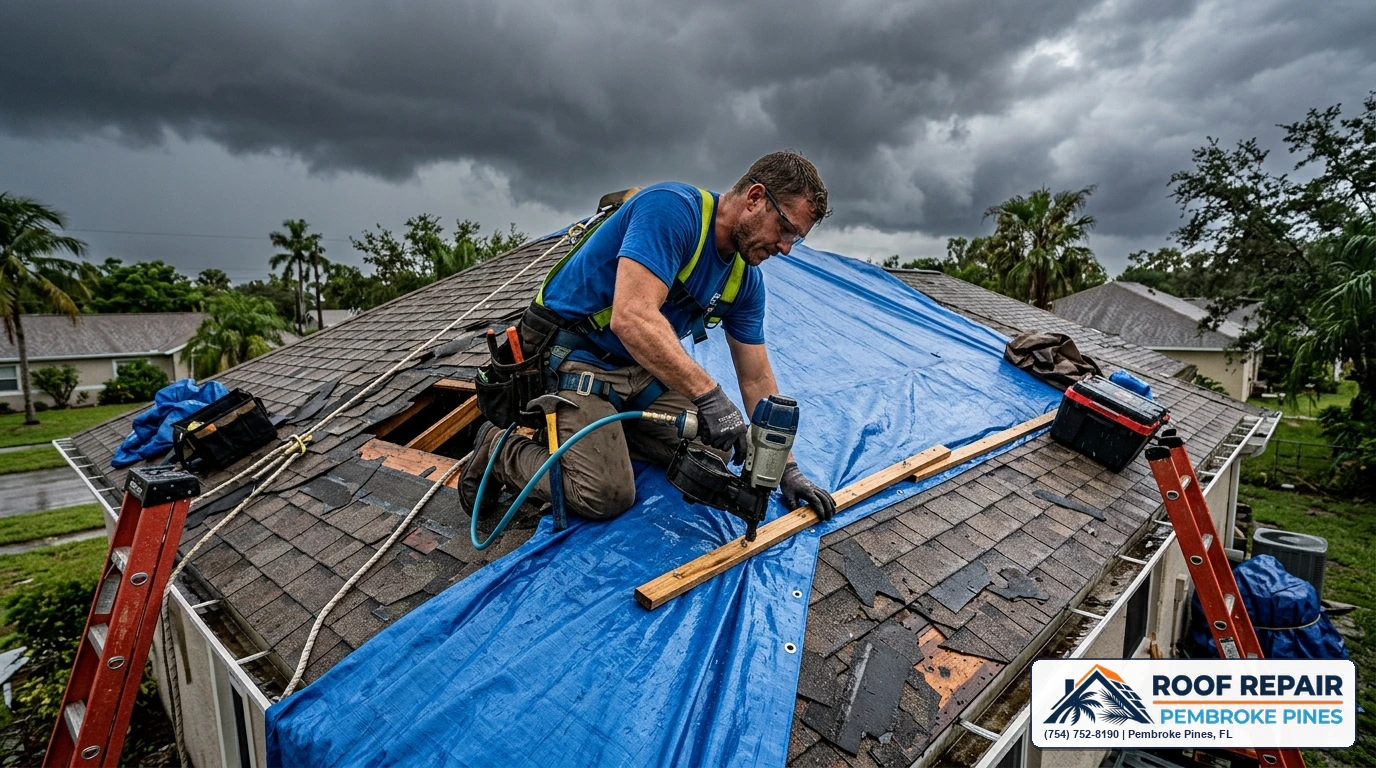
Temporary Roof Protection vs Permanent Repair
In many emergency situations, the immediate goal is stabilization — not a finished repair. Temporary roof protection, such as tarping or board-up, is designed to stop active water intrusion and prevent further damage until a permanent solution can be completed.
Temporary protection is appropriate when weather conditions prevent a full repair, when materials need to be sourced, or when the damage requires more extensive work than can be done in a single emergency visit.
The permanent repair follows once conditions allow — addressing the actual roofing failure, replacing damaged materials, and ensuring the repaired area integrates properly with the surrounding roof system. For homes needing Pembroke Pines residential roofing specialists, stabilization is the critical first step.
How Emergency Roof Damage Is Evaluated
Every emergency call follows a structured sequence designed to stabilize the situation, assess the damage accurately, and determine the most appropriate path to permanent repair.
Identify Immediate Exposure
We assess how much of the roof is compromised and whether water is actively entering the home. The first priority is understanding the scope and urgency of the situation — is temporary protection needed immediately, or can the permanent repair begin right away?
Inspect the Damaged Roofing Area
Once the immediate situation is understood, we examine the damaged section to determine what caused the failure — wind displacement, debris impact, material deterioration, or a combination of factors. This informs the scope of the permanent repair.
Stabilize or Repair the Vulnerable Section
If conditions allow a permanent repair on the same visit, we complete it. If temporary protection is needed first, we apply tarping or board-up to secure the exposed area and schedule the permanent repair.
Evaluate Surrounding Roofing Components
Emergency damage in one area sometimes indicates stress on adjacent materials. Before finalizing the repair plan, we check nearby sections for additional vulnerabilities that could lead to problems if left unaddressed.
Emergency Roof Repair FAQ
Any roofing condition that is actively allowing water into the home, exposing the interior to weather, or posing an immediate risk of further damage. This includes sudden leaks during storms, displaced roofing materials, fallen debris that has breached the roof surface, and exposed roof decking.
Move belongings away from active water entry, place containers to catch dripping water, and avoid entering rooms with sagging ceilings. Do not attempt to climb onto the roof, especially during wet or windy conditions.
No. Tarping is a stabilization measure designed to prevent additional water intrusion until a permanent repair can be completed. Tarps are affected by UV, wind, and rain over time, so the underlying damage still needs to be properly repaired.
In some cases, yes — if the damage is localized and replacement materials are available. More extensive damage may require a stabilization visit first, followed by a scheduled return for the permanent repair once materials are sourced and conditions allow.
Stabilizing the roof to prevent further damage is the priority. You can notify your insurer at the same time or shortly after. Documenting the damage with photos before temporary protection is applied is recommended, as insurers typically want to see the original condition.
Dealing With Sudden Roofing Damage? Have the Affected Area Evaluated
If your roof has been damaged by a storm, debris impact, or sudden failure — contact us to schedule an evaluation. We'll assess the damage, stabilize the affected area if needed, and provide a clear plan for permanent repair.