
Roof Vent & Pipe Boot Repair in Pembroke Pines — Penetration Seal Restoration
Every pipe, vent, and exhaust opening that passes through your roof creates a potential leak point. The rubber boots and collars that seal these penetrations are among the first components to fail under South Florida's relentless UV exposure. We replace deteriorated pipe boots, reseal vent collars, and restore the watertight seal around every roof penetration.
Signs a Roof Penetration Seal Has Failed
Failed pipe boots and vent seals produce some of the most predictable roof leaks — water entering directly around a pipe and dripping onto the ceiling below. These indicators suggest one or more penetration seals on your roof may need replacement.
Water stains on ceilings directly below bathroom or kitchen areas
Plumbing vent pipes exit through the roof directly above bathrooms and kitchens. When the boot around the pipe cracks, water follows the pipe down to the ceiling below — producing stains that are directly traceable to the penetration.
Cracked or visibly deteriorated rubber around roof pipes
If you can see pipe boots from ground level or an upper window, look for rubber that has turned brittle, cracked, or pulled away from the pipe. UV-degraded rubber is typically gray, hardened, and visibly fractured.
Intermittent dripping that starts minutes after rain begins
Unlike complex leak paths where water travels along the deck before dripping, penetration leaks tend to produce dripping that starts relatively quickly once rain begins — because the water path from roof surface to ceiling is short and direct.
Moisture or rust stains around vent openings in the attic
If you can safely access the attic, look at the underside of the roof deck around pipe and vent penetrations. Water tracks, rust stains on metal components, or damp insulation around these points indicate active water entry.
Safe Ways to Check for Penetration Leaks
Look for ceiling stains above bathrooms
Plumbing vents exit directly above bathrooms — stains in these ceilings are the most common indicator of a failed pipe boot.
Check attic around pipe penetrations
When safely accessible, look at the underside of the deck around pipes for water tracks, damp insulation, or daylight around the penetration.
Observe pipe boots from ground level with binoculars
Cracked, gray, or visibly deteriorated rubber around pipe boots can often be spotted from the ground using binoculars.
How Roof Penetrations Fail in Pembroke Pines
UV-Degraded Pipe Boots
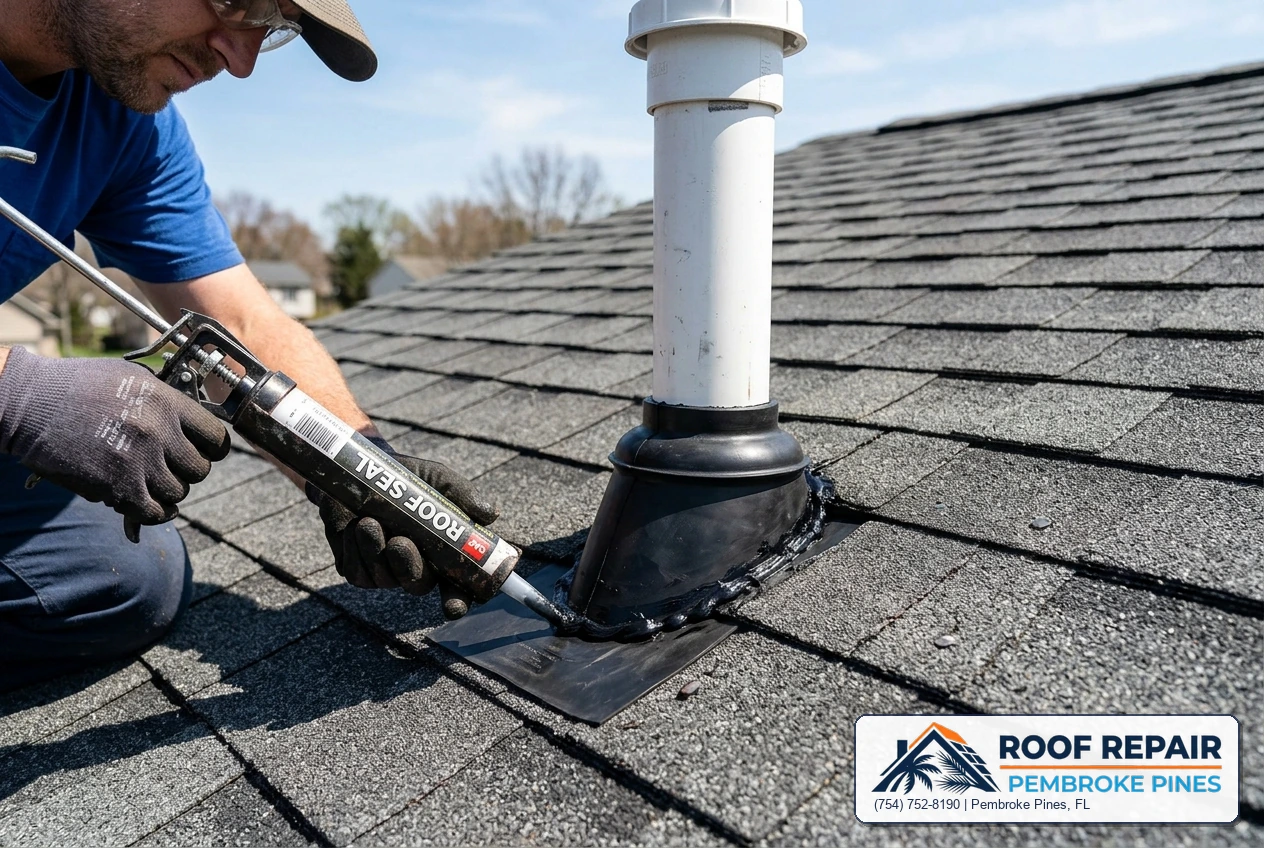
Standard neoprene pipe boots degrade rapidly under South Florida's UV intensity. The rubber hardens, cracks, and eventually splits — creating gaps around the pipe that allow direct water entry with every rainfall.
Loose or Shifted Vent Collars
Exhaust fan vents and attic ventilation openings can shift from wind pressure or settle as the roof structure moves. When the collar separates from the roof surface, the gap beneath allows wind-driven rain to enter.
Failed Sealant Around Equipment Mounts
HVAC equipment, satellite mounts, and solar panel attachments create additional penetrations that rely on sealant for waterproofing. When these sealants fail, water enters around the mounting hardware.
Why Pipe Boots Are the Most Common Roof Leak Source
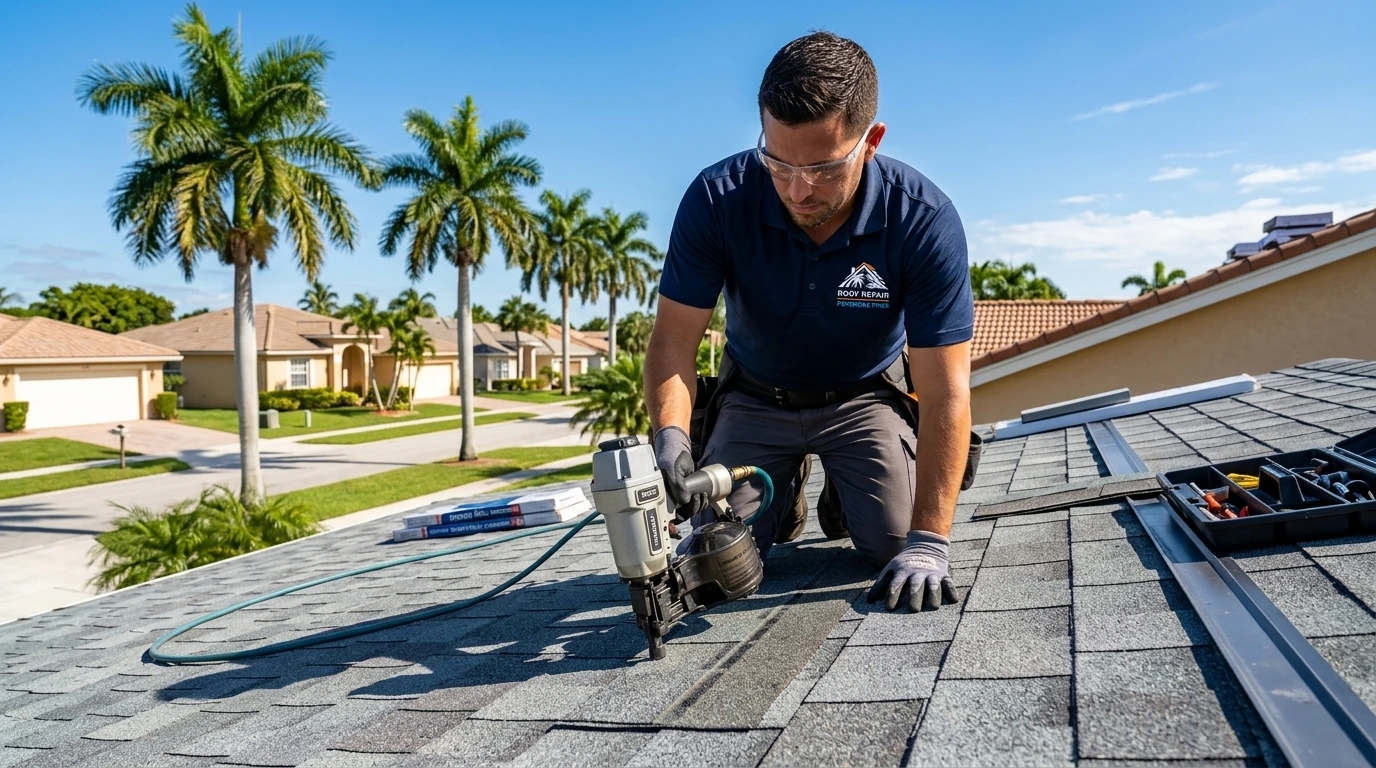
Across all the roofing repairs we handle in Pembroke Pines, deteriorated pipe boots are responsible for more leaks than almost any other single component. The reason is simple: every home has multiple plumbing vent pipes, each sealed with a rubber boot that is exposed to direct sunlight year-round.
Standard neoprene pipe boots are designed to flex around the pipe and create a water-tight seal. But constant UV bombardment causes the rubber to lose its flexibility, harden, and crack — often within a shorter timeframe than the roofing materials around it. This means pipe boots frequently fail while the rest of the roof is still in good condition.
Replacing a pipe boot is one of the most straightforward and cost-effective roof repairs available. For homeowners working with roofing specialists in Pembroke Pines, addressing failed pipe boots promptly prevents the water damage that a direct penetration leak can cause over time.
How Penetration Seal Repairs Are Completed
Identify All Compromised Penetrations
We inspect every pipe boot, vent collar, and equipment mount on the roof to determine which seals have failed, which are deteriorating, and which are still functional. This ensures all vulnerable penetrations are addressed rather than fixing one while another fails shortly after.
Remove the Failed Boot or Collar
The deteriorated pipe boot or vent collar is carefully removed along with any old sealant. The surrounding roofing materials are lifted as needed to access the base flashing and ensure proper installation of the replacement.
Install UV-Resistant Replacement
A new pipe boot or penetration seal is installed with proper sizing and integration with the surrounding roofing materials. Where applicable, we use UV-resistant alternatives that offer improved longevity under South Florida sun exposure.
Seal and Verify the Installation
The replacement is sealed at all edges, surrounding shingles or tiles are restored to proper position, and the finished installation is checked to confirm the penetration is fully sealed and the water drainage path around it is unobstructed.
Vent & Pipe Boot Repair FAQ
A pipe boot is a rubber collar that seals the gap between a plumbing vent pipe and the roof surface. Under South Florida's intense UV, the rubber dries out, cracks, and splits — allowing rainwater to enter directly around the pipe.
Plumbing vent pipes exit the roof directly above bathrooms. When the boot around the pipe deteriorates, water follows the pipe down to the ceiling below — producing stains that are directly traceable to the penetration.
In most cases, surrounding shingles need to be carefully lifted to properly install a new boot with correct flashing integration. Installing over existing materials without proper integration typically results in repeat failure.
Most residential roofs have several — plumbing vent pipes, exhaust fan vents, attic ventilation openings, and sometimes equipment mounts. Each penetration requires its own seal, and each seal is subject to independent deterioration.
Yes. Metal-and-rubber combination boots, thermoplastic boots, and some newer silicone-based products offer improved UV resistance and longer service life compared to standard neoprene boots.
Related Penetration Repair Services in Pembroke Pines
Seeing Water Near a Roof Penetration? Have the Vent or Pipe Boot Checked
If you suspect a failed pipe boot or deteriorated vent seal — based on ceiling stains near plumbed areas, visible cracking around roof pipes, or attic moisture around penetrations — contact us to schedule an evaluation. We'll inspect all penetrations, replace any that have failed, and ensure every seal is restored.