
Roof Deck & Water Damage Repair in Pembroke Pines — Structural Restoration
Beneath every layer of roofing material sits the roof deck — the plywood or OSB sheathing that forms the structural foundation of the roof system. When sustained water intrusion reaches the deck, it can rot the plywood, delaminate the layers, compromise rafter connections, and create conditions for mold growth. We repair and replace water-damaged roof decking across Pembroke Pines.
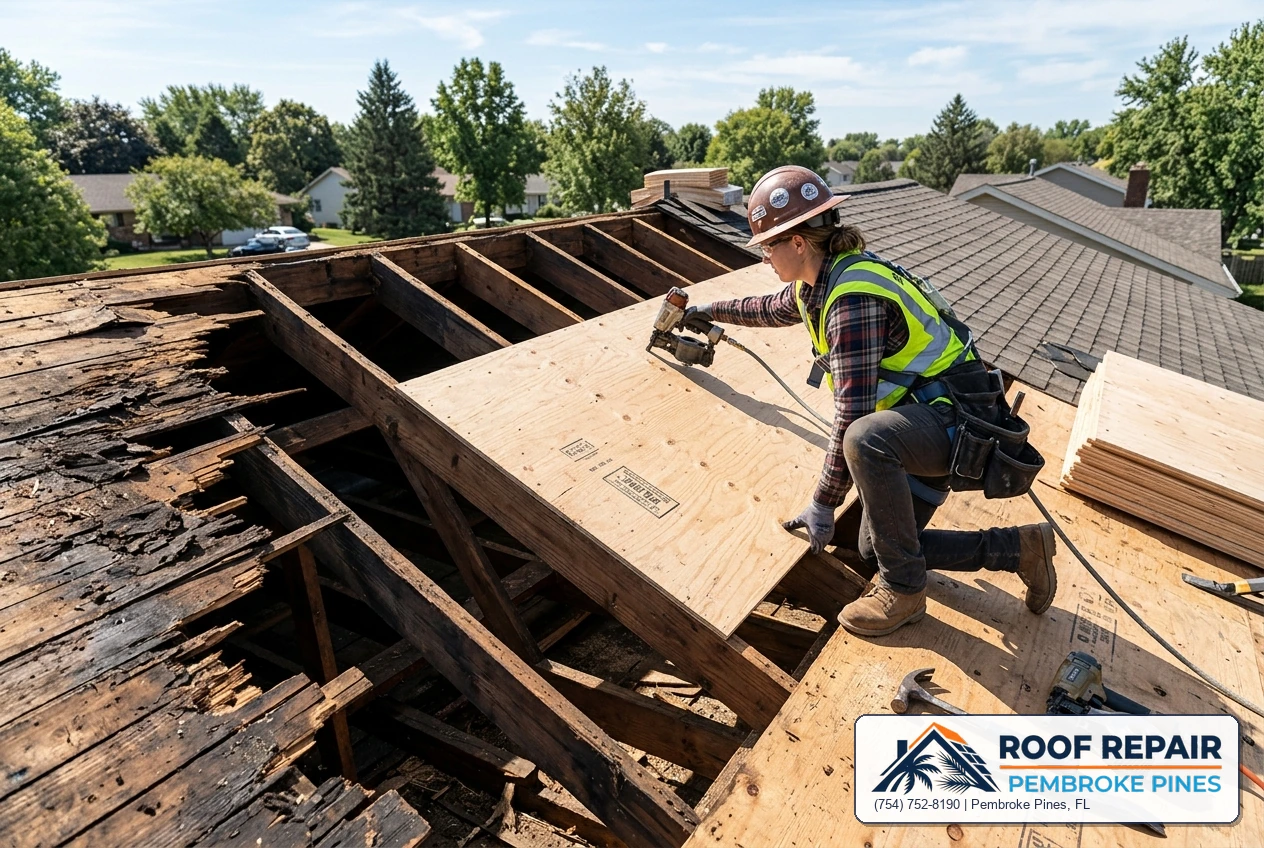
Signs of Roof Deck Water Damage
Roof deck damage develops beneath the surface — hidden under shingles, tiles, or membrane — and often progresses significantly before becoming visible from inside the home. These signs suggest the deck beneath your roofing materials may be compromised.
Sagging or dipping visible on the exterior roof surface
When the plywood deck softens from sustained moisture, it loses its ability to support the roofing materials above. This produces visible dips, waves, or uneven areas on the roof surface that indicate the deck beneath has lost structural integrity.
Recurring ceiling stains that return after surface roof repairs
When ceiling stains reappear after the roof surface has been repaired, it often indicates the deck itself is holding moisture. The water stored within damaged decking continues to seep through to the ceiling even after the original entry point above the deck has been fixed.
Musty or moldy odor in the attic or upper rooms
Persistent dampness in the roof deck creates conditions for mold growth on the plywood surface and surrounding structural members. The musty odor produced by mold activity in the attic often signals that the deck has been absorbing moisture over an extended period.
Dark staining or soft spots on the underside of the deck in the attic
When safely accessible, the attic reveals direct evidence: darkened plywood, visible water tracks, delaminated layers, and soft spots that yield under light pressure. These conditions confirm that moisture has reached and damaged the deck structure.
Checks You Can Make From Inside the Home
Look at ceilings in upper rooms for recurring stains
Stains that reappear after drying — especially in the same locations — suggest a moisture source in the deck above rather than a simple surface leak.
Check the attic for musty odors
A persistent damp or moldy smell in the attic indicates trapped moisture, likely in the roof deck or insulation in contact with the deck.
Observe the roofline from the yard for sagging
Visible dips or uneven areas on the roofline — especially between roof trusses — can indicate softened decking beneath the roofing material.
How Deck Damage Progresses in South Florida
Stage 1: Moisture Absorption
Water entering through a failed component — a cracked pipe boot, lifted flashing, or damaged shingle — contacts the plywood deck. Initially, the deck absorbs the moisture without visible signs. In South Florida's humidity, the deck cannot dry effectively between rain events.
Stage 2: Delamination and Softening
Sustained moisture causes the layers of plywood to separate (delaminate) and the wood fibers to soften. The deck loses structural rigidity in the affected area. Mold begins to colonize the damp wood surface.
Stage 3: Structural Compromise
The weakened deck can no longer support the weight of roofing materials properly. Sagging becomes visible, fastener pullout occurs, and adjacent structural members — rafters and trusses — begin absorbing moisture from contact with the damaged deck.
Why Deck Damage Can't Be Fixed From the Surface
One of the most important things to understand about roof deck water damage is that it cannot be repaired by fixing the roofing surface alone. When the plywood beneath the roofing has absorbed moisture, delaminated, or begun to rot, repairing the shingle or tile above it does not restore the deck's structural integrity.
Deck repair requires removing the roofing materials in the affected area, cutting out the damaged plywood, replacing it with new decking of the appropriate thickness and grade, and then installing new underlayment and roofing material over the repaired section.
For homeowners in Pembroke Pines dealing with persistent or recurring leaks, professional roof evaluation that includes deck inspection is essential — because the answer to a recurring leak may be underneath the surface, not on top of it.
How Roof Deck Repairs Are Completed
Map the Full Extent of Deck Damage
We probe the deck from above and below (when attic access is available) to determine the full extent of the damage — which is often larger than the visible leak area. Water travels along the deck and can damage sections far from the original entry point.
Remove Roofing Materials Over the Affected Area
Shingles, tiles, or membrane in the damaged zone are carefully removed to expose the deck beneath. Surrounding materials are preserved where possible and set aside for reinstallation if they remain in good condition.
Cut Out and Replace Damaged Decking
Compromised plywood is cut back to sound structural members. New plywood of the same thickness and grade is installed, properly fastened to the rafters or trusses, and integrated with the surrounding intact deck. Any damaged structural members are sistered or reinforced.
Install Underlayment and Restore Roofing Surface
New underlayment is installed over the replaced deck section, properly lapped with adjacent existing underlayment. Roofing materials are then reinstalled — matching the existing material type, pattern, and color — and all edges and transitions are sealed.
Roof Deck Repair FAQ
Common indicators include sagging roof surface, soft or spongy areas, persistent ceiling stains that reappear after surface repairs, musty attic odor, and visible darkening or delamination on the underside of the plywood in the attic.
It depends on the extent. Small areas of surface softening may be reinforced. But sections where plywood has delaminated, developed mold, or lost structural integrity need to be cut out and replaced with new decking material.
Sustained water intrusion from failed components — leaking flashings, cracked pipe boots, damaged shingles or tiles. In South Florida's humidity, even small amounts of trapped water cause faster decay and mold growth than in drier climates.
In some cases, months or years. Water can spread across the underside of the deck without producing a visible ceiling stain — especially if the attic space allows moisture to disperse. By the time damage becomes visible, the affected area may be larger than expected.
Coverage depends on the cause. Sudden storm damage may be covered, while gradual deterioration or deferred maintenance is typically excluded. Your policy and the specific circumstances determine coverage.
Related Structural Repair Services in Pembroke Pines
Concerned About Roof Deck Damage? Schedule a Structural Evaluation
If you're dealing with persistent leaks, sagging areas, recurring ceiling stains, or musty odors from the attic — the roof deck beneath your roofing materials may need attention. Contact us for a thorough evaluation of your roof structure, including the condition of the plywood decking, underlayment, and supporting members.