
Storm Damage Roof Repair in Pembroke Pines, Florida
Severe weather is a constant reality for Pembroke Pines homeowners. When storms pass through, the damage they leave behind isn't always immediately visible. We inspect, document, and repair storm-related roofing damage — from displaced shingles and cracked tiles to damaged flashing and exposed roof components.
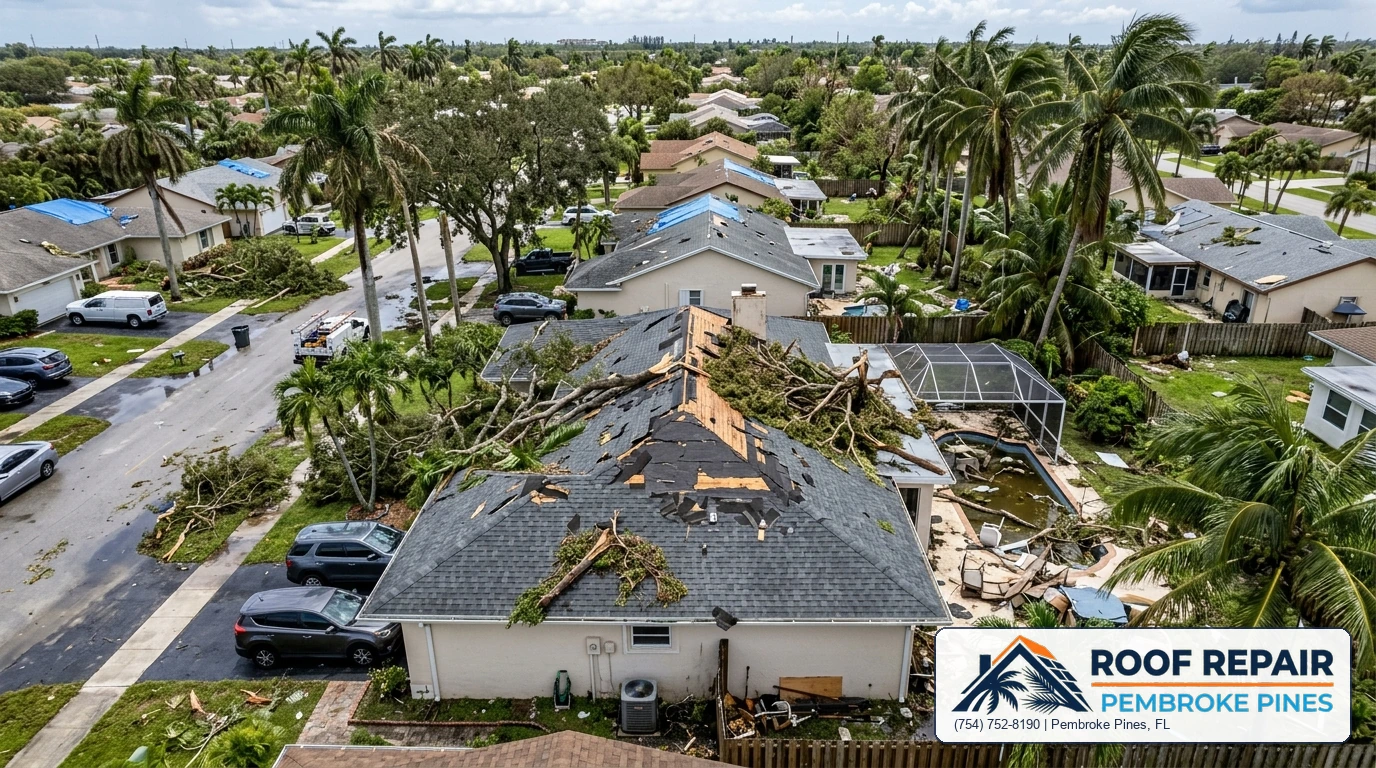
Signs Your Roof May Have Been Damaged During Severe Weather
After a significant storm, these ground-level indicators suggest your roof may have sustained damage worth investigating with a professional inspection.
Roofing materials visible in the yard or gutters
Shingle tabs, tile fragments, or pieces of flashing found on the ground after a storm indicate materials have been displaced from the roof surface by wind or impact.
New water stains appearing on interior ceilings after storms
Ceiling discoloration that appears for the first time after a weather event suggests storm-created damage has opened a new water entry path that didn't exist before.
Dented or displaced gutters and downspouts
Storm damage to gutters can indicate that the roof edge, fascia, or drip edge was also impacted. Gutter displacement sometimes reveals edge damage that affects water drainage from the roof.
Tree branches or debris resting on or near the roof
Even if a branch didn't visibly penetrate the surface, impact damage, cracked tiles, or shifted materials beneath the debris may not be apparent until the area is inspected professionally.
What Can Be Safely Seen From Ground Level?
You don't need to climb on the roof to check for storm damage. These observations from ground level can help determine whether a professional inspection is warranted.
Walk around the perimeter of the home
Look for displaced roofing materials, damaged siding, dented gutters, or broken fascia along the roofline.
Check for debris in the yard
Shingle tabs, tile fragments, or pieces of metal in the yard after a storm suggest material loss from the roof surface.
Look at the roof surface from a distance
From across the street or a nearby vantage point, look for obvious irregularities — missing sections, color changes, or materials that appear shifted.
Inspect interior ceilings for new stains
Check every room for ceiling stains or damp spots that appeared during or shortly after the storm.
Roofing Components Commonly Inspected After Storms
Different parts of the roofing system respond to storm conditions in different ways. A thorough post-storm inspection evaluates each of these areas for evidence of weather-related damage.
Shingles
High winds can lift, crease, tear, or completely remove asphalt shingles. Seal strips may fail, allowing tabs to flutter and eventually separate.
- Missing or displaced shingle tabs
- Lifted edges exposing underlayment
- Creased shingles from wind uplift
Tiles
Concrete and clay tiles can crack from debris impact, shift from wind pressure, or break when objects strike the surface during storms.
- Cracked or split tiles
- Tiles shifted out of alignment
- Broken tile edges or corners
Flashing
Wind can peel back, bend, or separate flashing from roof-to-wall junctions, valleys, and penetrations — allowing water behind otherwise intact roofing materials.
- Bent or peeled-back flashing
- Separated step flashing sections
- Failed sealant at transitions
Roof Edges and Ridge
Ridge caps and roof edge materials are particularly vulnerable to wind uplift due to their exposed position at the top and edges of the roof.
- Displaced ridge cap shingles
- Damaged drip edge sections
- Hip cap tiles loosened or cracked
Roof Penetrations
Pipe boots, vent flashing, and equipment mounts can be knocked loose, cracked, or displaced by storm wind and debris, creating new leak paths.
- Shifted or cracked pipe boots
- Loose vent collars
- Debris lodged around penetrations
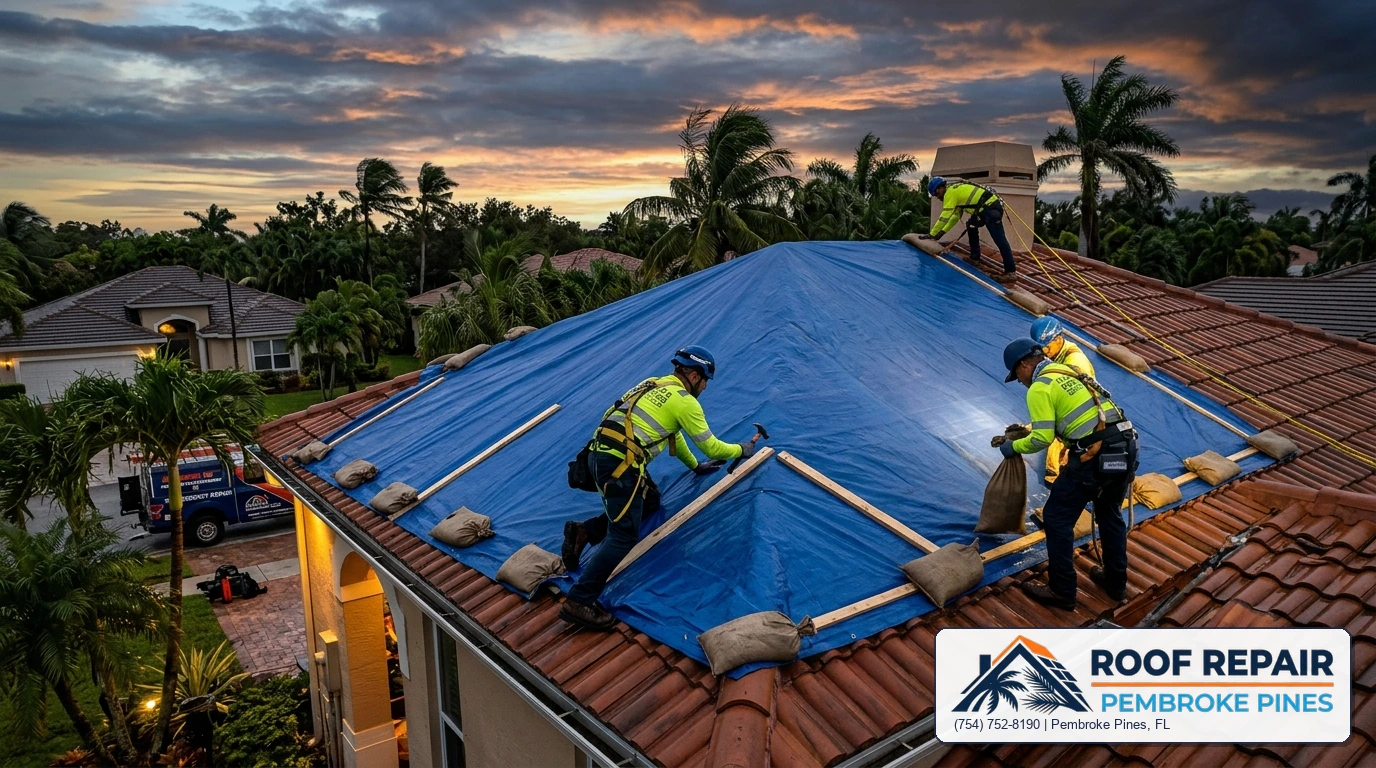
Visible Storm Damage vs Less-Obvious Water Entry Points
The damage you can see from the ground — missing shingles, broken tiles, dented gutters — is often only part of the picture. Many storm-created failures are less obvious: a shingle seal that broke without the tab flying off, a tile that cracked but stayed in position, or flashing that lifted just enough to allow water behind it during the next wind-driven rain event.
This is why post-storm roof inspections are valuable even when the roof appears intact from ground level. A professional evaluation checks for both the visible failures and the less-obvious conditions that can lead to leaks weeks or months after the storm has passed.
For comprehensive evaluation after severe weather, local roofing repair professionals can identify both categories of damage before they escalate.
Storm Damage Inspection and Repair Process
Our post-storm approach is designed to identify all weather-related damage — not just the obvious failures — and provide a clear path to restoring the roof's protective function.
Review Visible Weather Damage
We start with a ground-level assessment, documenting obvious damage to the roof, gutters, fascia, and surrounding property. This initial review establishes the scope and helps prioritize which roof areas need the closest on-roof inspection.
Inspect Vulnerable Roof Areas
On the roof, we focus on the areas most susceptible to storm damage — ridge, edges, valleys, flashing transitions, penetrations, and any sections facing the storm's primary wind direction. Each area is inspected for displaced, cracked, lifted, or compromised materials.
Determine Appropriate Repair Requirements
Based on the inspection findings, we determine whether the damage is localized enough for targeted repairs, or extensive enough to require broader section replacement. You receive a detailed assessment with documentation before any work begins.
Repair and Recheck Surrounding Components
After completing the repair, we verify that surrounding materials are secure and haven't been weakened by the same storm event. This final check helps prevent a follow-up failure from an adjacent area that appeared intact during the initial inspection.
Storm Damage Roof Repair FAQ
As soon as conditions are safe. Storm damage can be hidden — lifted shingles, cracked tiles, and compromised flashing may not be visible from ground level. The sooner a professional inspection takes place, the sooner any damage can be identified and addressed before it leads to water intrusion.
Yes. High winds can lift shingle edges, break their seal strips, or create creases without fully removing them from the roof surface. These less-obvious failures can still allow water entry — particularly during wind-driven rain events that follow the initial storm.
Coverage depends on your specific policy, the type of damage, and the condition of the roof prior to the storm. We do not provide insurance advice, but we can provide thorough documentation of storm-related damage to support whatever claims process you choose to pursue.
Storm damage repair is defined by the cause — damage resulting from severe weather. Emergency repair is defined by urgency — any sudden roofing failure that requires immediate attention. A storm can cause both, but not all storm damage requires emergency response, and not all emergencies are storm-related.
We evaluate the extent of the damage, the age and condition of the existing roofing materials, and whether the damage is localized or widespread. If the affected area is contained and surrounding materials are sound, repair is usually appropriate. When damage is extensive or the roof was already near end-of-life, replacement may be the better option.
Related Storm Repair & Claim Resources in Pembroke Pines
Has Severe Weather Affected Your Roof? Schedule a Professional Inspection
If your property has been through a significant storm — or you've noticed new leaks, displaced materials, or debris damage since the last weather event — contact us to schedule a post-storm inspection. We'll document the findings, identify all weather-related damage, and provide a clear repair plan.