
Professional Roof Leak Repair in Pembroke Pines, FL
When water stains appear on your ceiling or you notice moisture during rainfall, identifying the actual entry point is the critical first step. We systematically locate, diagnose, and repair roof leaks for homeowners throughout Pembroke Pines and Broward County — addressing the source, not just the symptom.
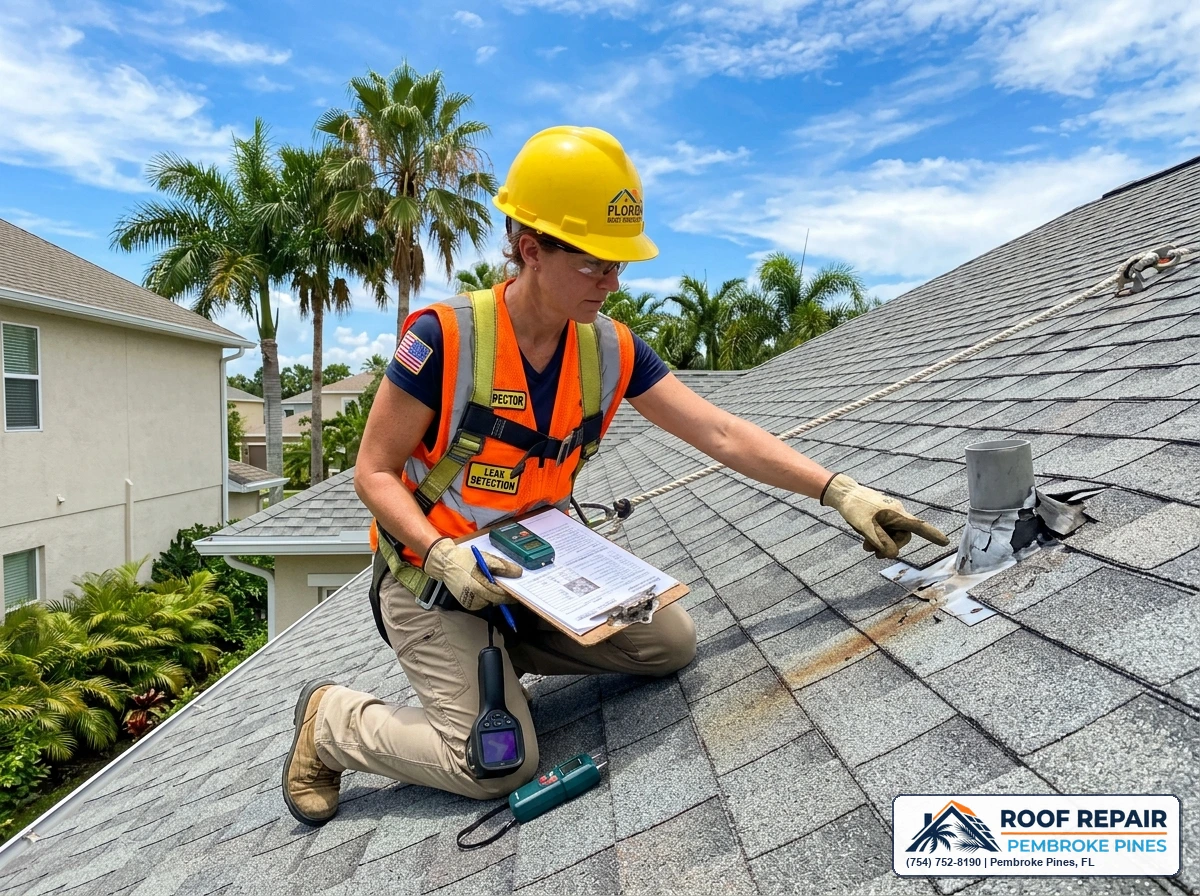
Signs Your Roof May Have an Active Leak
Some leaks are immediately obvious. Others develop slowly and reveal themselves only after moisture has traveled well beyond the original entry point. Here are the conditions that warrant professional evaluation.
Water stains or discoloration on interior ceilings
Brown or yellowish rings on ceiling drywall are one of the most common indicators of moisture reaching the interior from a compromised roofing component above. The stain location often does not align with the roof entry point.
Dripping water during or after rainfall
Active dripping during storms points to a direct breach in the roofing system. Water may enter through damaged flashing, compromised valleys, cracked tiles, lifted shingles, or failed penetration seals.
Musty odor in rooms or attic spaces
A persistent damp smell, particularly in upper-floor rooms or attic areas, can indicate moisture that has been accumulating for some time — often from a slow, intermittent leak that isn't producing a visible stain yet.
Bubbling, peeling, or blistering paint on walls or ceilings
Paint that separates from drywall or plaster surfaces usually means moisture is present behind the finish. This is a secondary symptom that suggests water has been reaching the area long enough to affect the substrate.
Interior Signs Homeowners Can Safely Look For
You don't need to climb on your roof to identify potential leak symptoms. These checks can be performed safely from inside the home before scheduling a professional evaluation.
Inspect ceilings in upper-floor rooms
Look for any new discoloration, bubbling paint, or soft spots that may indicate moisture from above.
Check attic spaces when safely accessible
Look for daylight visible through the roof boards, damp insulation, water tracks on rafters, or dark staining on decking.
Note when the leak appears
Does it only happen during heavy rain? Wind-driven rain? Every rainfall? This information helps narrow the search to specific roof areas.
Check walls near the roofline
Water from roof-to-wall transitions or flashing failures can travel down interior walls, causing paint bubbling or staining near the ceiling line.
Look at interior closets and corners
Leaks sometimes travel to areas homeowners rarely check — interior closets, behind furniture, or ceiling corners where evidence can go unnoticed.
Common Areas Where Roof Leaks Begin
Roof leaks don't happen randomly. Certain areas of the roofing system are more vulnerable to water intrusion than others — particularly in Pembroke Pines, where heavy rainfall, wind-driven rain, and intense UV exposure accelerate material deterioration.
Roof Valleys
Valleys channel large volumes of water during storms. If the valley flashing is improperly sealed or the surrounding materials have deteriorated, water can enter beneath the roof covering.
- Worn or corroded valley flashing
- Debris accumulation restricting flow
- Cracked sealant along valley edges
Damaged Roofing Materials
Missing, cracked, or lifted shingles and tiles create direct pathways for rainwater. In South Florida, UV degradation and thermal cycling weaken roofing materials more rapidly than in milder climates.
- Missing or displaced shingles or tiles
- Cracked or split roofing surfaces
- Exposed underlayment or decking
Roof Penetrations
Every pipe, vent, or equipment mount that passes through the roof surface creates a potential leak point. Pipe boots, vent collars, and sealants around penetrations deteriorate over time — especially under South Florida sun.
- Cracked or split pipe boots
- Failed sealant around vents
- Loose penetration flashing
Flashing Transitions
Flashing protects transitions between the roof surface and walls, chimneys, skylights, and other structures. When flashing lifts, corrodes, or loses its seal, water can enter behind the roofing materials without obvious surface evidence.
- Lifted or separated step flashing
- Deteriorated counter flashing seals
- Corroded metal flashing components
Flat or Low-Slope Roof Areas
Properties with flat or low-slope sections face additional risks from ponding water and membrane deterioration. These areas don't shed water as effectively as sloped roofs and require specific attention during leak diagnosis.
- Standing water after rain
- Membrane punctures or open seams
- Deteriorated edge details

Why the Ceiling Stain May Not Be Directly Below the Leak
One of the most common misconceptions about roof leaks is that the ceiling stain marks the exact location of the roof failure. In reality, water frequently travels along the roof deck, down rafters, and across sheathing before finding a point where it can drop through to the living space below.
In Pembroke Pines homes — many of which feature truss-framed roof structures with long, continuous deck spans — water can travel several feet before it drips through. This means the actual entry point on the roof surface may be in a completely different section than where the stain appears indoors.
This is why effective leak repair starts with proper tracing, not assumptions based on stain location. A professional roofing repair service in Pembroke Pines will follow the water's path from interior evidence back to the roof surface entry point.
How Professional Roof Leak Detection Works
We don't guess where the leak is coming from. Every repair starts with a structured diagnostic process that identifies the root cause before any repair work begins.
Review Interior Water Evidence
We start inside the home, examining ceiling stains, damp spots, and any visible moisture trails. If attic access is available, we check the underside of the roof deck for water tracks, stained rafters, or damp insulation that can help narrow the search area on the roof above.
Inspect Potential Exterior Entry Points
On the roof surface, we systematically check the areas most likely to be responsible — flashing details, penetrations, valleys, material damage, and transitions. Each potential entry point is evaluated based on its condition and proximity to the interior evidence.
Trace the Most Likely Leak Path
We connect the exterior findings to the interior symptoms, determining how water is traveling from the entry point to the visible damage. This step confirms whether the identified roof failure is actually responsible for the leak — preventing unnecessary repairs to areas that aren't the source.
Repair and Reevaluate the Affected Area
Once the source is confirmed, we complete the repair and inspect surrounding components for additional vulnerabilities. A localized repair is only effective if the adjacent materials are still sound — otherwise, the next heavy rain may reveal a new entry point nearby.
Repair Options Based on the Leak Source
Not every leak requires the same scope of work. Here's what to expect depending on the source and severity of the water intrusion.
Roof Leak Repair FAQ
We follow a systematic approach — starting with the interior water evidence, then moving to the roof surface to check penetrations, flashing, valleys, and material conditions. Water often travels along the roof deck before dropping through a ceiling, so the stain location and the actual entry point are frequently in different areas.
It can, if the original repair addressed the symptom rather than the actual cause. A recurring leak usually means either the entry point was misidentified, or a nearby component — such as deteriorated flashing or damaged underlayment — wasn't addressed during the initial repair.
A leak that only appears during heavy downpours typically involves a failure point that isn't directly exposed to light rain — such as a compromised valley, a partially lifted flashing detail, or an area where wind-driven rain forces water beneath roofing materials that would normally shed lighter rainfall.
Not always. Ceiling stains can also result from plumbing leaks, condensation from HVAC systems, or moisture intrusion through walls. A proper roof inspection determines whether the stain is roof-related or originates from another source.
Most localized leak repairs are completed within a single day once the source is identified. In some cases, the diagnosis itself takes time — particularly when the leak path is complex or when interior access is needed to trace the water's travel route.
Seeing Water Stains or an Active Leak? Schedule a Roof Evaluation
If water is entering your home through the roof — or you suspect a developing leak based on ceiling stains, damp spots, or musty odors — contact us to schedule a professional evaluation. We'll locate the source, explain what's needed, and provide a written estimate before any work begins.